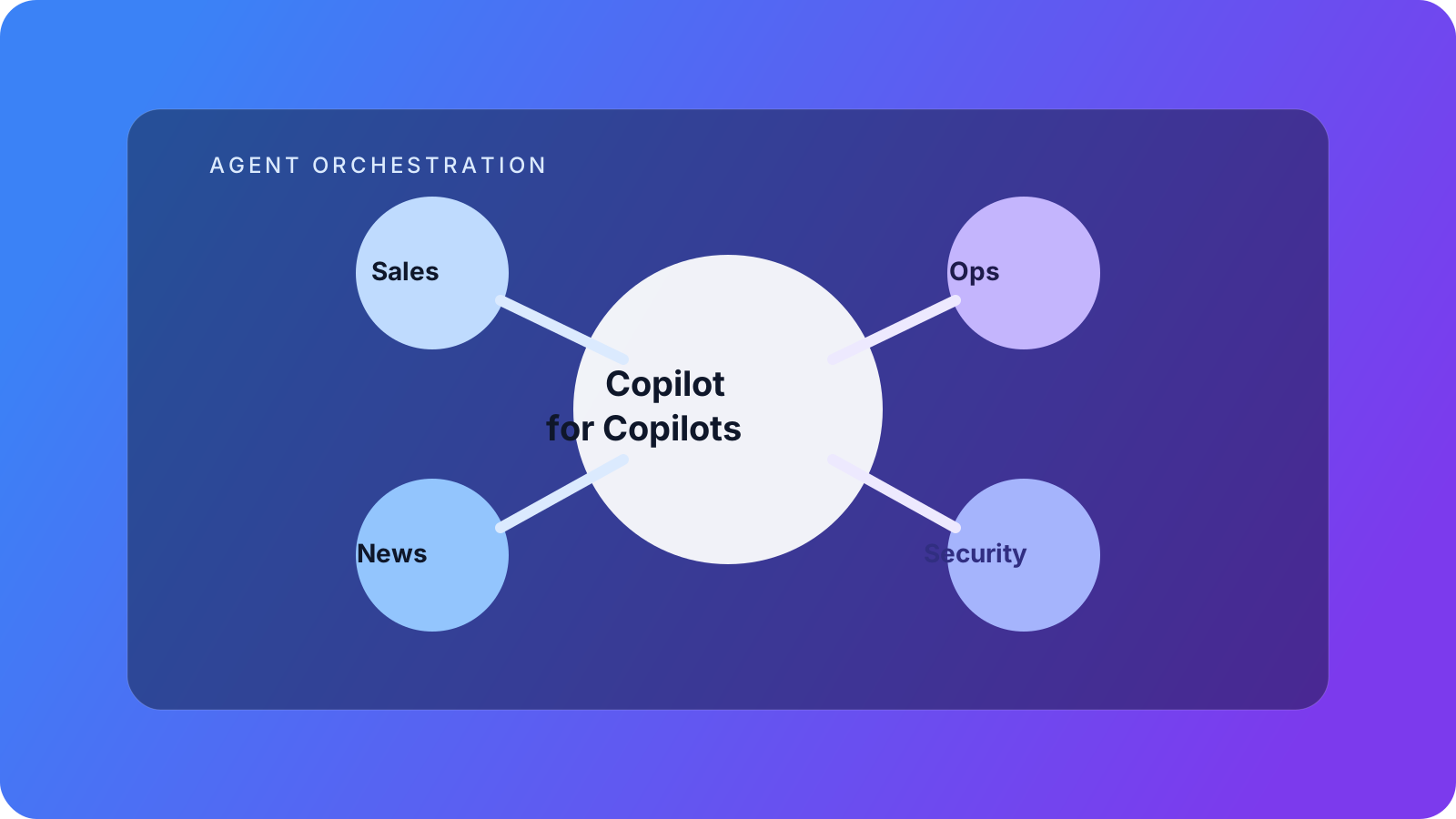
Microsoft has introduced a new orchestration layer called Copilot for Copilots, a service intended to help enterprises coordinate, supervise, and periodically reassure the growing number of AI agents now participating in everyday business workflows.
Positioned as a management fabric for agentic systems, the offering is said to provide task routing, priority balancing, oversight controls, and what briefing materials describe as “cross-copilot alignment”, ensuring one AI assistant does not schedule a meeting that another AI assistant was already planning to decline on a user’s behalf.
According to partners briefed on the launch, the service is aimed at customers now running multiple copilots across productivity, development, security, analytics, and internal operations. The pitch is that while the first Copilot helps people work faster, Copilot for Copilots helps the copilots work together with the kind of structured accountability normally associated with a newly appointed programme office.
One source said the early demos focused heavily on governance.
“Customers like AI agents right up until the moment six of them start making adjacent decisions with real confidence,” the source said. “This gives organisations a way to appoint a slightly more senior AI to keep the others aligned, on message, and ideally out of the procurement system.”
Microsoft is understood to be promoting the service as particularly useful in large enterprises where agents may need to coordinate across email, Teams, service desks, data platforms, and corporate news feeds. One demonstration reportedly showed the system summarising market headlines, assigning response actions to specialist copilots, and then producing an executive update written in a tone described as calmly transformational.
A second person familiar with the rollout said the platform includes escalation logic for moments when multiple agents disagree, stall, or begin generating near-identical strategy documents in parallel.
“In the event of conflict, Copilot for Copilots can elevate the matter to a supervisory agent, generate a consensus draft, and, where necessary, schedule a workshop for the other agents to reflect on alignment opportunities,” the person said.
The service is also said to include a news coordination capability, allowing communications teams to distribute approved messaging across internal assistant networks so every bot references the same announcements, positioning statements, and key talking points. Microsoft believes that will be particularly valuable for organisations concerned about inconsistent AI-generated commentary following major product launches, restructures, or spontaneous branding activity.
Early partner reaction has been mixed between interest and quiet alarm. One channel source said the concept makes a certain kind of sense, but only up to the point where a customer asks whether they now need a Copilot administrator, a Copilot architect, and a Copilot relationship manager to support the Copilot supervising the other copilots.
Still, Microsoft appears confident there is strong demand for software that can organise the software meant to reduce the need for extra organisation. Internal materials are said to refer to the opportunity as agentic coordination maturity, although one attendee at a preview session noted that, by the end of the presentation, the most advanced feature appeared to be an AI-generated org chart for the bots themselves.